
Smaller administrative units can improve governance, reduce regional disparities and unlock economic potential
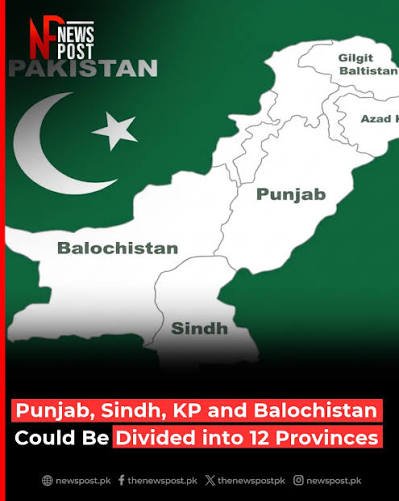
Pakistan’s debate over creating new provinces should be driven by governance, economic development and public welfare—not ethnic politics or dynastic interests. With a population of 241.5 million, Pakistan remains divided into just four provinces, an administrative structure increasingly challenged by population growth, poverty, regional inequalities and poor public service delivery.
The 2023 Pakistan Bureau of Statistics census puts Punjab’s population at 127.7 million, Sindh’s at 55.7 million, Khyber Pakhtunkhwa’s at 40.9 million and Balochistan’s at 14.9 million. Such enormous differences raise legitimate questions about administrative capacity, representation and equitable development.
Smaller provinces could bring decision-making closer to citizens, improve access to education and healthcare, strengthen local economies, generate employment and make public spending more accountable. However, new boundaries alone will not eliminate poverty or corruption; meaningful fiscal decentralisation and empowered local governments must accompany restructuring.
The latest controversy illustrates the danger of treating administrative reform as an ethnic confrontation. PPP Chairman Bilawal Bhutto-Zardari’s warning that dividing Sindh could lead to bloodshed is deeply unfortunate. Political disagreements should be settled through constitutional debate, not warnings of violence. MQM-P, meanwhile, argues that Karachi and other urban centres deserve representation and resources proportionate to their populations. Its demand should be examined on governance merits rather than dismissed through ethnic labels.
Article 239(4) of the Constitution already provides a legal mechanism for altering provincial boundaries, requiring a two-thirds majority in the affected provincial assembly, alongside the parliamentary constitutional amendment process.
Pakistan needs a national debate on smaller provinces, transparent resource distribution and empowered local governments. No political party should possess a veto over administrative reform. The country needs better governance, not political fiefdoms.