
The International Court of Justice (ICJ), the United Nations’ highest judicial body, has ruled that Myanmar committed genocide against its Muslim Rohingya minority during the military’s 2017 operations in northern Rakhine State.
In a landmark judgment, the 15-judge panel found that Myanmar’s security forces carried out mass killings, widespread sexual violence, executions and other atrocities against the Rohingya population, concluding that the actions constituted genocide under the 1948 Genocide Convention.
The ruling marks the first time the ICJ has held a state responsible for genocide, making it a landmark decision in international humanitarian and human rights law.
ICJ identifies evidence of systematic genocide
Delivering the judgment, ICJ President Judge Yuji Iwasawa said Myanmar’s security forces killed thousands of Rohingya civilians, committed widespread sexual violence, carried out extreme acts of violence against children and attacked people attempting to flee.
The court found that Myanmar’s military conducted mass executions of Rohingya men and boys, raped women and girls, and burned or destroyed hundreds of villages during its so-called clearance operations.
Judges also considered the widespread anti-Rohingya hate speech and dehumanising rhetoric that preceded and accompanied the military campaign.
The court concluded that the only reasonable explanation for Myanmar’s actions was an intention to destroy a substantial part of the Rohingya population in northern Rakhine State.
This satisfied the demanding legal threshold for establishing genocide, which requires proof of an intention to destroy, wholly or partially, a protected national, ethnic, racial or religious group.
Gambia brought genocide case against Myanmar
The case was initiated by The Gambia in November 2019, accusing Myanmar of violating the Genocide Convention through its military campaign against the Rohingya.
The Gambia brought the proceedings with support from the 57-member Organisation of Islamic Cooperation (OIC).
Although the alleged atrocities occurred in Myanmar, The Gambia was entitled to bring the case because countries that are parties to the Genocide Convention can seek to hold other signatories accountable for violations of its provisions.
The proceedings attracted international attention, with 11 countries subsequently intervening in the case.
The ICJ held public hearings on the merits in January 2026 before delivering its final judgment on November 19.
More than 700,000 Rohingya forced to flee
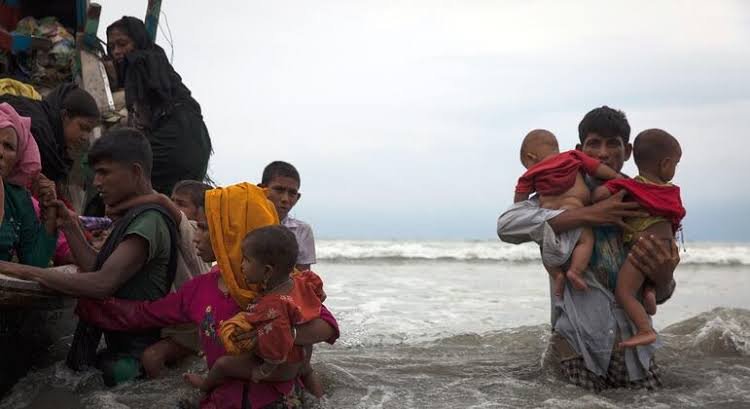
The 2017 military crackdown forced more than 700,000 Rohingya Muslims to flee Myanmar and seek refuge in neighbouring Bangladesh.
The Rohingya, a predominantly Muslim ethnic minority, have faced decades of discrimination, restrictions on citizenship and movement, and violence in Myanmar, where the majority population is Buddhist.
The military described its 2017 campaign as a security operation against Rohingya militants. However, survivors, international investigators and human rights organisations documented widespread killings, rape, village destruction and forced displacement.
Bangladesh continues to host a large Rohingya refugee population, particularly in camps around Cox’s Bazar.
Myanmar ordered to compensate Rohingya victims
The ICJ directed Myanmar to take several measures to address its violations of the Genocide Convention.
These include:
- Ending any continuing violations of the Genocide Convention.
- Investigating individuals reasonably suspected of committing genocide and prosecuting them where warranted.
- Providing guarantees that similar violations will not happen again.
- Taking measures to facilitate the safe, voluntary and dignified return of displaced Rohingya.
- Reuniting families separated by the military campaign.
- Compensating the Rohingya community and individual victims for the damage suffered.
The court said the amount and arrangements for compensation would be determined in a subsequent phase of the proceedings. Myanmar must submit a report on restitution and compensation measures within two years of the judgment.
The ruling is final and cannot be appealed.
Historic implications for international justice
The verdict represents a major development in international efforts to hold governments accountable for genocide.
International courts have previously established genocide in cases involving Rwanda, the 1995 Srebrenica massacre in Bosnia and atrocities committed under Cambodia’s Khmer Rouge regime.
The Myanmar judgment is also expected to influence international legal debates surrounding other allegations of genocide, including South Africa’s case against Israel over its military operations in Gaza.
The ICJ’s decision reinforces the principle that states can be held internationally responsible for genocide and that the Genocide Convention imposes binding obligations on governments to prevent and punish the crime.
For the Rohingya community, the judgment represents a significant legal recognition of atrocities that survivors and human rights organisations have documented for years.