

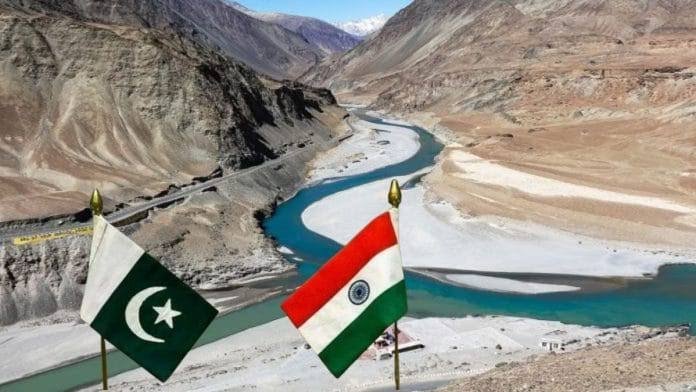
Pakistan has told the United Nations that India cannot hold more than 240 million Pakistanis hostage by weaponising shared water resources, warning that attempts to stop or manipulate river flows threaten livelihoods, food security and regional stability.
Speaking at a United Nations Security Council Arria-formula meeting on November 18, Pakistan’s Deputy Permanent Representative, Ambassador Usman Jadoon, strongly rejected India’s unilateral decision to place the 1960 Indus Waters Treaty (IWT) in abeyance.
Jadoon said India’s threats to stop water flows into Pakistan amounted to the weaponisation of a shared natural resource and endangered the well-being of more than 240 million people.
He maintained that the Permanent Court of Arbitration, in its August 31, 2026 award, had reaffirmed that the Indus Waters Treaty remained fully in force and that India continued to be bound by its obligations.
“No State should be permitted to use shared natural resources as instruments of coercion or political pressure, in violation of international law and binding treaty obligations,” Jadoon said.
The Pakistani envoy also emphasised the importance of peaceful dispute resolution under Article 33 of the UN Charter and referred to Security Council Resolution 2788, which addresses cooperation in preventing conflicts.
Pakistan accuses India of violating international obligations
In a separate response to India’s position at the meeting, Pakistan’s First Secretary Ansar Shah described New Delhi’s unilateral suspension of the treaty as “outlaw behaviour”.
Shah argued that the agreement contained no provision allowing either country to unilaterally suspend its obligations.
He said using water on which more than 240 million Pakistanis depended as an instrument of political pressure was an act of coercion rather than a legitimate reassessment of the treaty.
Pakistan urged India to respect international law, honour its treaty commitments and follow the principles of good neighbourly relations.
What the Indus Waters Treaty provides
Signed on September 19, 1960, with the World Bank playing a facilitating role, the Indus Waters Treaty established a framework for sharing the waters of the Indus river system between India and Pakistan.
Under the agreement, the eastern rivers — Ravi, Beas and Sutlej — were allocated primarily to India, while the western rivers — Indus, Jhelum and Chenab — were allocated primarily to Pakistan, subject to specified uses by India.
India announced its decision to place the treaty in abeyance in April 2025 following the killing of 26 people in Indian-administered Kashmir. New Delhi accused Pakistan of involvement, an allegation Islamabad rejected.
International court ruling adds to dispute
The dispute intensified following India’s decision, but Pakistan has continued to maintain that the treaty cannot be suspended unilaterally.
On August 31, 2026, the Permanent Court of Arbitration in The Hague ruled that the treaty remained in force and that India remained bound by its obligations concerning the western rivers.
India rejected the arbitration proceedings, arguing that the court lacked jurisdiction and that its decisions would not affect India’s position.
The latest diplomatic confrontation at the United Nations highlights growing tensions over transboundary water management between the two nuclear-armed neighbours.
Pakistan maintains that shared water resources must be governed through international law, cooperation and mutually agreed arrangements rather than unilateral political or economic pressure.