

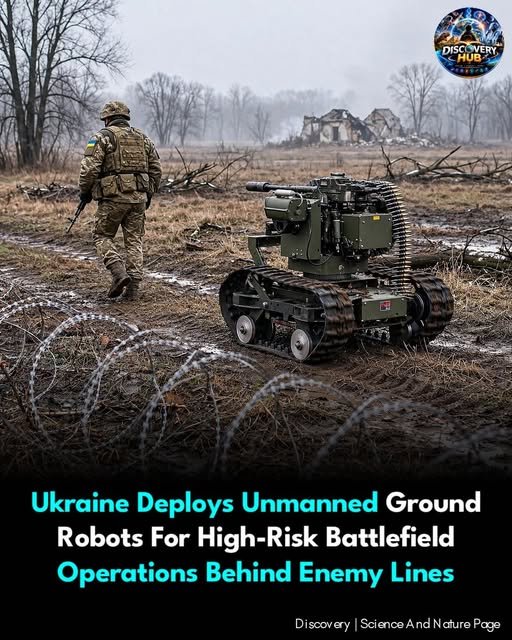
The United Nations has failed to secure an international agreement banning lethal autonomous weapons, commonly known as killer robots, exposing deep divisions among countries over the future of artificial intelligence in warfare, military control and accountability for civilian deaths.
The failure to reach a legally binding prohibition reflects disagreements between countries seeking an outright ban on weapons that can select and attack targets without meaningful human intervention and military powers that want to preserve the option of developing and deploying autonomous weapons systems.
The central issue is whether machines should ever be allowed to make life-and-death decisions without meaningful human control.
Why the UN failed to ban killer robots
The failure was not simply a disagreement over technology. It reflected competing military, strategic and diplomatic interests among countries developing advanced autonomous weapons.
1. Russia’s opposition and the consensus rule
The most immediate obstacle was the requirement for consensus under the UN Convention on Certain Conventional Weapons (CCW).
Russia opposed stronger treaty language and prolonged negotiations, according to reporting by The Guardian. Because decisions under the convention require consensus, a small number of opposing countries can prevent an agreement even when a large majority supports negotiations.
This allowed disagreements over the wording and legal status of a proposed agreement to derail efforts to launch formal treaty negotiations.
2. US reluctance to accept legally binding restrictions
The United States has invested heavily in military artificial intelligence and autonomous weapons research. Washington was reluctant to commit to a legally binding international protocol that could constrain future military development and deployment.
Although the US has participated in discussions about human control over autonomous weapons, its position at the Geneva negotiations did not support the binding agreement sought by many countries.
This reflects a broader strategic concern among military powers: restrictions could affect their technological and operational advantages in future conflicts.
3. Military powers want to preserve technological flexibility
Autonomous weapons offer military planners potential advantages in surveillance, target identification, speed of response and operations in environments where communications may be disrupted.
Countries investing in these systems are reluctant to accept rules that could restrict their ability to develop new military technologies.
The disagreement is therefore also about who will control the future battlefield and whether international law should limit the use of machines capable of independently selecting and attacking targets.
4. Disagreement over what constitutes meaningful human control
Countries have struggled to agree on how much human involvement should be required before an autonomous weapon can be deployed.
Supporters of a treaty want clear prohibitions on systems that target people autonomously and restrictions on weapons that cannot be used consistently with international humanitarian law.
Other countries argue that existing international humanitarian law is sufficient and that additional restrictions could unnecessarily limit legitimate military applications.
The UN itself acknowledges that existing international law applies to autonomous weapons, but there is currently no dedicated legally binding international instrument specifically regulating them.
What was agreed in Geneva instead?
After the week-long negotiations, countries agreed to continue discussions for another two years and work towards elaborating a possible international instrument by 2028.
However, the agreement does not guarantee that the eventual instrument will be legally binding.
The outcome fell short of the objective set by UN Secretary-General António Guterres, who had called for negotiations on a legally binding agreement to begin in 2026.
UN High Representative for Disarmament Affairs Izumi Nakamitsu described the outcome as a significant achievement while acknowledging that it fell short of the original ambition.
Seven countries had proposed moving towards negotiations on rules restricting autonomous weapons, but their proposal did not secure the necessary consensus. AP News+2
UN reports warn of humanitarian and legal dangers
The UN Secretary-General’s 2024 report on lethal autonomous weapons systems (document A/79/88) compiled submissions from governments, international organisations, scientists, civil society and industry.
The report highlighted concerns surrounding the development and deployment of weapons that can select and engage targets without human intervention.
The principal concerns include:
- Civilian casualties resulting from mistaken target identification.
- Inability to adequately distinguish civilians from combatants.
- Lack of accountability when autonomous systems cause unlawful deaths.
- Algorithmic bias and unpredictable machine behaviour.
- Escalation of armed conflicts through automated military responses.
- Difficulty establishing responsibility for violations of international humanitarian law.
The UN has stressed that international humanitarian law applies to all weapons, including autonomous systems. However, existing law does not provide a dedicated international treaty specifically regulating these technologies.
Red Cross warns against handing warfare to machines
The International Committee of the Red Cross (ICRC) has repeatedly called for legally binding international rules to prohibit unpredictable autonomous weapons and systems designed to target human beings.
In its November 2026 submission to the Geneva conference, the ICRC argued that years of discussions had failed to produce sufficiently clear prohibitions and restrictions.
It recommended negotiations on a new protocol establishing prohibitions on anti-personnel autonomous weapons and unpredictable autonomous systems.
The organisation has warned that transferring decisions over life and death to machines raises fundamental humanitarian, legal and ethical questions.
Human rights organisations criticise the outcome
Amnesty International criticised the November 21 outcome, arguing that extending discussions without a clear commitment to legally binding rules was inadequate after 13 years of negotiations.
The organisation said a majority of countries supported establishing a global treaty but that the consensus-based negotiating process enabled opposing states to block progress.
Amnesty and the Stop Killer Robots coalition are advocating a treaty that would prohibit weapons capable of targeting humans without meaningful human control and establish strict restrictions on other autonomous weapons.
The Stop Killer Robots coalition brings together more than 330 civil society organisations across 78 countries.
The danger of an emerging autonomous weapons arms race
The failure to agree on binding restrictions raises concerns about a potential international arms race involving artificial intelligence, autonomous drones and robotic military platforms.
As military technologies become increasingly sophisticated, countries could face growing pressure to deploy systems capable of identifying and attacking targets at speeds beyond meaningful human supervision.
The absence of dedicated international rules also leaves unresolved questions about accountability when autonomous weapons kill civilians or violate the laws of war.
The Geneva negotiations have therefore postponed a major international decision about the limits of artificial intelligence in warfare until at least the next phase of discussions, with a possible agreement targeted for 2028.
For now, the world has no dedicated legally binding global treaty specifically prohibiting or comprehensively regulating lethal autonomous weapons.